

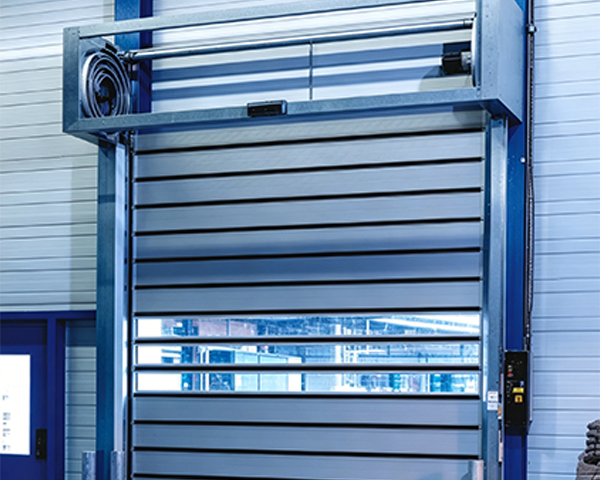
Customized industrial door manufacturing and engineering is a specialized process focused on designing,
fabricating, and delivering industrial doors that match the exact operational, structural, safety, and
environmental needs of a facility. Unlike standard off-the-shelf doors, custom industrial doors are built
for specific applications such as warehouses, factories, logistics centers, cold storage rooms, cleanrooms,
loading docks, food processing plants, automotive workshops, aerospace facilities, and high-security sites.
In modern industrial environments, door performance directly affects workflow efficiency, temperature
control, security, hygiene, noise reduction, energy consumption, and workplace safety. For this reason,
customized industrial door manufacturing and engineering has become a critical part of building design,
plant expansion, and facility optimization. Businesses increasingly require doors with precise dimensions,
special opening speeds, higher durability, advanced insulation, fire resistance, impact resistance, automation,
and integration with smart control systems.
This page provides a detailed, SEO-friendly overview of customized industrial door manufacturing and
engineering, including definitions, key benefits, product types, technical specifications, engineering
considerations, materials, process flow, and common application scenarios. The content is written for
use in blog pages, category pages, service pages, and industry landing pages.
Customized industrial door manufacturing refers to the design and production of industrial door systems
based on project-specific requirements rather than standardized dimensions or generic specifications.
The manufacturing process typically includes technical consultation, measurement review, structural
design, material selection, fabrication, surface treatment, hardware assembly, automation integration,
testing, and installation guidance.
A customized industrial door is engineered to fit a particular opening, operational environment, and
performance goal. For example, one facility may need a high-speed door with frequent cycle operation and
dust control, while another may require a heavy-duty sectional overhead door with thermal insulation and
security reinforcement. Custom engineering ensures the finished door aligns with all of these needs.
Industrial buildings rarely operate under the same conditions. Temperature fluctuations, traffic frequency,
machinery movement, hygiene rules, pressure control, and security demands vary widely from site to site.
Standard doors may fit physically, but they often fail to deliver the necessary performance over time.
Customized industrial doors solve this problem by aligning door structure and function with operational goals.
| Business Need | Why Custom Industrial Doors Help |
|---|---|
| Temperature control | Custom insulation, sealing, and fast operation reduce energy loss. |
| High traffic flow | Reinforced mechanisms and automation support frequent opening cycles. |
| Hygiene compliance | Smooth surfaces and specialized materials help maintain clean environments. |
| Security protection | Strong panels, locks, and access control options improve site security. |
| Noise reduction | Acoustic materials help reduce sound transfer between production areas. |
| Special dimensions | Custom sizing ensures a precise fit for unique openings and building layouts. |
The engineering phase is what transforms a door from a simple barrier into a high-performance industrial
system. Customized industrial door engineering provides measurable advantages across operation, safety,
and long-term cost efficiency.
Every facility has different structural conditions. Custom manufacturing allows the door width, height,
track configuration, panel thickness, and mounting method to be adapted to the project. This reduces
installation issues and improves sealing performance.
Industrial doors are often used many times each day. Custom engineering can optimize opening speed,
closing cycle, actuator strength, and control logic to support continuous operations in warehouses,
manufacturing plants, and distribution centers.
For climate-sensitive facilities, customized industrial doors can be designed with thermal insulation,
tight perimeter sealing, and rapid opening/closing to reduce heat transfer and lower HVAC energy usage.
Safety is a major priority in industrial environments. Custom doors can include photoelectric sensors,
emergency release systems, anti-pinch protection, soft bottom edges, fire-rated structures, and
fail-safe automation features to meet relevant safety requirements.
Proper engineering improves durability. By selecting the right materials, reinforcement structure,
guide system, and hardware components, the door can withstand high-cycle use, impacts, humidity,
corrosion, and other harsh conditions.
Modern industrial doors can be integrated with access control systems, RFID systems, vehicle detection,
loading dock equipment, fire alarms, smart building controls, and remote monitoring platforms.
Customized industrial door manufacturing covers a wide range of product categories. The right choice
depends on usage frequency, environmental conditions, space limitations, and performance requirements.
| Door Type | Main Features | Typical Applications |
|---|---|---|
| Sectional overhead door | Panel-based structure, space-saving opening method, insulation options | Warehouses, workshops, loading bays |
| High-speed door | Fast opening and closing, frequent cycle capability, automation control | Logistics centers, clean areas, cold storage |
| Rolling shutter door | Compact coil-up design, strong security performance, simple operation | Factories, storage rooms, commercial facilities |
| Sliding industrial door | Wide opening capacity, smooth lateral movement, heavy-duty tracks | Large warehouses, hangars, special industrial openings |
| Fire-rated industrial door | Fire resistance, smoke control, safety compliance | Factories, emergency zones, separation walls |
| Cold storage door | Thermal insulation, airtight sealing, frost resistance | Refrigeration rooms, food storage, freezers |
| Cleanroom door | Hygienic materials, smooth surfaces, airtight performance | Pharmaceutical, electronics, food processing |
| Security industrial door | Reinforced structure, impact resistance, access control compatibility | Critical infrastructure, secure storage, restricted areas |
Customized industrial door engineering is not just about appearance or dimensions. It requires a technical
assessment of how the door will perform in real operating conditions. The following factors are essential
in industrial door design and fabrication.
The opening size determines the door geometry, panel support, track system, and lifting mechanism.
Larger openings usually require stronger structural reinforcement and more advanced hardware.
A door that opens a few times per day has very different engineering requirements from a door that cycles
hundreds of times daily. High-frequency applications require motors, springs, rollers, bearings, and guides
that can withstand repeated mechanical stress.
Industrial doors may need to resist humidity, salt air, dust, wind pressure, chemical exposure, or extreme
temperature conditions. Material selection and surface finishing must reflect these environmental demands.
Door construction should match the level of security needed. Reinforced frames, anti-lift devices, strong
locking systems, and access control integration may be necessary for high-risk facilities.
Thermal performance is important for warehouses, refrigerated rooms, and climate-controlled facilities.
Engineers often consider U-value targets, panel thickness, seal quality, and thermal break design.
Industrial doors should be engineered with safety features that reduce risk to personnel, vehicles, and
equipment. This may include obstacle detection, emergency stop functions, manual release systems,
safety edges, warning lights, and audible alarms.
Material choice is one of the most important elements of customized industrial door manufacturing.
Different materials offer different levels of strength, corrosion resistance, weight control, hygiene,
and insulation performance.
| Material | Main Benefits | Common Use |
|---|---|---|
| Galvanized steel | High strength, good durability, cost-effective | Sectional doors, rolling shutters, security doors |
| Stainless steel | Corrosion resistance, hygienic surface, long service life | Food processing, cleanrooms, wet environments |
| Aluminum | Lightweight, corrosion resistant, modern appearance | High-speed doors, lightweight frames, commercial industrial areas |
| PVC / fabric materials | Flexible, fast motion, cost-efficient, lightweight | High-speed roll-up doors, internal separation zones |
| Insulated foam cores | Thermal efficiency, sound reduction, energy saving | Cold storage, climate-controlled warehouses |
| Tempered glass / vision panels | Visibility, light transmission, modern design | Observation doors, office-to-factory transitions |
One of the strongest advantages of customized industrial door manufacturing is the wide range of
configuration options. These options allow each door to be adapted to the functional and aesthetic needs
of the project.
| Customization Element | Available Options |
|---|---|
| Dimensions | Width, height, opening format, panel thickness |
| Surface finish | Powder coating, galvanized finish, stainless finish, painted finish |
| Insulation level | Standard, medium, high thermal insulation |
| Automation | Manual, semi-automatic, fully automatic, remote control |
| Control system | Push button, radar sensor, loop detector, PLC integration |
| Safety features | Photo sensors, safety edge, emergency stop, warning light |
| Visibility | Window panels, full vision sections, partial glazing |
| Wind resistance | Standard, reinforced, extra-heavy-duty configurations |
| Fire performance | Non-fire-rated, fire-rated, smoke-control options |
A professional customized industrial door manufacturing process usually follows a structured sequence
to ensure quality, consistency, and performance. While exact procedures may vary by product type,
the general workflow remains similar.
| Step | Process Description |
|---|---|
| 1. Requirement analysis | Assess opening size, use case, cycle frequency, environment, and safety needs. |
| 2. Technical design | Create drawings, structural plans, material specifications, and control logic. |
| 3. Material preparation | Source steel, aluminum, insulation, hardware, motors, and accessories. |
| 4. Fabrication | Cutting, welding, punching, bending, forming, and assembly are completed. |
| 5. Surface treatment | Galvanizing, powder coating, painting, or polishing improves durability and appearance. |
| 6. Hardware and automation integration | Install tracks, rollers, springs, motors, sensors, and control systems. |
| 7. Testing and quality inspection | Check movement, sealing, load-bearing capacity, safety response, and finish quality. |
| 8. Packaging and delivery | Protect components for transport and provide installation documentation. |
Quality control is essential in customized industrial door manufacturing because these products must
perform reliably under demanding conditions. Engineering standards may include dimensional accuracy,
load testing, cycle testing, electrical safety, material thickness checks, weld inspection, sealing tests,
and surface adhesion verification.
Industrial doors used in regulated sectors may also need to comply with fire safety, hygiene, wind load,
and operational safety standards. Although exact requirements vary by region and application, professional
engineering always emphasizes consistency, traceability, and documented inspection procedures.
When buyers evaluate customized industrial doors, they often focus on performance features that have
a direct impact on productivity and cost efficiency.
Below is a general specification table for customized industrial door projects. Actual values depend on
the chosen product type, engineering requirements, and site conditions.
| Specification Item | Typical Range / Options |
|---|---|
| Door width | Customized according to opening size; common industrial ranges from compact to extra-wide openings |
| Door height | Customized according to building and vehicle access requirements |
| Opening speed | Standard to high-speed operation, depending on door type |
| Insulation thickness | Optional thermal core thickness for energy-saving applications |
| Wind resistance | Standard to reinforced heavy-duty levels |
| Cycle life | Designed for low, medium, or high-frequency operation |
| Drive system | Manual, motorized, chain drive, gear drive, servo system |
| Control method | Button, remote, sensor, access control integration |
| Safety devices | Photoelectric sensor, safety edge, alarm, stop switch |
| Finish options | Galvanized, painted, powder-coated, polished, special coating |
Customized industrial doors are used in a wide range of industries because each sector has unique
functional demands. Their role goes beyond simple entry and exit; they help manage workflow, protect
inventory, and support safety and compliance.
| Industry | Common Door Requirements |
|---|---|
| Logistics and warehousing | Fast cycling, impact resistance, automation, wide openings |
| Food and beverage | Hygienic materials, insulation, easy cleaning, airtight sealing |
| Pharmaceuticals | Cleanroom compatibility, controlled access, low contamination risk |
| Automotive | Large access openings, durability, high traffic tolerance |
| Cold storage | Thermal protection, frost resistance, rapid closing |
| Manufacturing plants | Security, heavy-duty construction, operational efficiency |
| Aerospace and hangars | Very large dimensions, wind resistance, strong structure |
| Electronics | Dust control, static-sensitive area support, clean operation |
| Retail and commercial storage | Security, convenience, energy efficiency |
Choosing the right customized industrial door requires balancing performance, budget, compliance, and
long-term maintenance. The best door is not always the most expensive one; it is the one that matches
the real needs of the facility.
A well-engineered customized industrial door is easier to maintain and more cost-effective over its
service life. Proper design reduces excessive wear, simplifies inspection, and improves component
accessibility. This can lower unplanned downtime and extend the lifespan of motors, rollers, hinges,
seals, and track systems.
Routine maintenance usually includes checking alignment, lubricating moving parts, testing safety
devices, inspecting seals, cleaning surfaces, and verifying control system operation. When the initial
engineering is sound, these tasks become faster and more predictable.
The following keywords are relevant for content optimization, search visibility, and topical relevance:
A customized industrial door is a door system designed and manufactured to meet the exact operational,
structural, and environmental requirements of a specific facility.
Custom manufacturing offers better fit, higher performance, stronger durability, improved energy
efficiency, and better compatibility with industrial processes.
Warehousing, manufacturing, food processing, cold storage, logistics, pharmaceuticals, automotive,
and cleanroom environments are among the most common users.
Yes. Many customized industrial doors can be equipped with motors, sensors, remote controls, and
integrated access systems for automatic operation.
They can be. With proper insulation, sealing, and fast operation, customized industrial doors can help
reduce energy loss and improve climate control.
Customized industrial door manufacturing and engineering plays a vital role in modern industrial facility
design. By tailoring each door to the site’s specific needs, businesses can achieve better safety,
stronger security, improved energy efficiency, smoother workflow, and longer-lasting performance.
From high-speed doors to fire-rated systems, from insulated warehouse solutions to hygienic cleanroom
entrances, custom industrial door engineering delivers practical value across many industries.
For companies planning facility upgrades, new construction, or performance improvements, customized
industrial door solutions offer a flexible, scalable, and highly effective way to support operational
goals while meeting technical and environmental demands.
Шэньянская компания Manlong Metal Products Co., Ltd.


Авторские права © 2026, Shenyang Manlong Metal Products Co., Ltd. Все права защищены Приложения
Этот веб-сайт использует файлы cookie, чтобы обеспечить вам максимально эффективное использование нашего веб-сайта.

 English
 Español
 Portugues
 Français
 Deutsch
 العربية
 ไทย
ไทย Türk dili
 Tiếng Việt



 телефон
Комментарий
(0)