

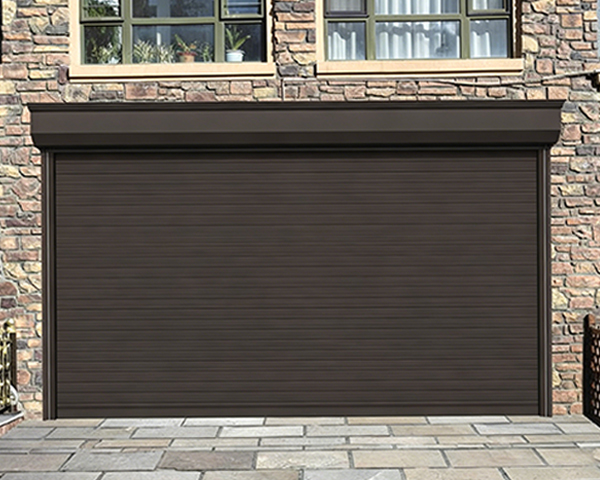
Large industrial door systems for warehouse loading areas are essential components of modern logistics, manufacturing, distribution, and supply chain operations. These doors are designed to support fast, safe, and efficient movement of goods between indoor storage spaces and external loading zones. In high-traffic warehouse environments, the right industrial door system can improve workflow, protect products, reduce energy loss, and help maintain a secure and controlled facility environment.
Warehouse loading areas require door systems that can handle frequent opening and closing cycles, large equipment access, varying weather conditions, and continuous operational demands. Unlike standard commercial doors, large industrial door systems are engineered for durability, speed, insulation, security, and low maintenance. They are commonly used at loading docks, shipping bays, receiving areas, freight entrances, cold storage facilities, and industrial production sites.
This page provides a detailed overview of large industrial door systems for warehouse loading areas, including definitions, main types, core benefits, common specifications, selection factors, performance features, and industry applications. The information below is written for SEO-friendly use in blog pages, category pages, service pages, and industry resource sections.
Large industrial door systems are specialized access systems designed to secure and manage oversized openings in warehouse loading areas. These doors are built to support frequent operation, large clear openings, and demanding industrial conditions. In many facilities, they are installed at points where forklifts, pallet jacks, trucks, and loading equipment move goods in and out of the building.
These systems can include roll-up doors, sectional overhead doors, high-speed doors, insulated doors, sliding doors, folding doors, and specialty dock doors. Each type is selected based on the facility’s traffic volume, insulation needs, safety requirements, and environmental conditions. The main purpose of a warehouse loading area door is to provide smooth access while protecting the facility from dust, wind, moisture, unauthorized entry, and temperature fluctuations.
Large industrial door systems are often used in logistics hubs, distribution centers, manufacturing warehouses, food storage buildings, pharmaceuticals, e-commerce fulfillment centers, and large-scale storage facilities. Their role is not only structural but also operational, since they directly affect loading efficiency and site productivity.
Warehouse loading areas are among the busiest parts of an industrial facility. They experience constant movement, heavy impact risk, exterior exposure, and rapid workflow changes. Standard doors are typically not suitable for these conditions. A specialized industrial door system is needed to deliver reliable performance under high usage.
One of the biggest reasons is operational speed. Loading and unloading must happen quickly to avoid delays. Another reason is safety. Large openings must be controlled to reduce accidents, protect workers, and prevent collisions with moving equipment. Energy efficiency is also critical, especially in climate-controlled warehouses. A properly designed industrial door can reduce air exchange and help stabilize indoor temperatures.
Security is another major factor. Warehouse loading areas often connect to valuable inventory and equipment. Heavy-duty doors help protect against unauthorized access and theft. In addition, weather resistance is important because loading zones are often exposed to rain, wind, snow, dust, and extreme temperatures.
Different warehouse loading areas require different door technologies. The following are the most common industrial door types used in large-scale facilities.
Sectional overhead doors are made of multiple horizontal panels that move upward along tracks and rest near the ceiling when open. They are widely used in warehouse loading docks because they save space, provide good insulation, and support frequent use. These doors are available in insulated and non-insulated versions and can be fitted with windows, manual controls, or automatic operators.
Roll-up steel doors consist of narrow slats that coil into a drum above the opening. They are known for strength, compact storage, and high durability. These doors are a common choice for industrial facilities that need secure access and limited overhead space usage. They are particularly useful in areas where ceiling clearance is restricted.
High-speed doors are designed for rapid open-and-close cycles. They are often used in warehouse loading zones where traffic flow must remain continuous. These doors help reduce air loss, improve process efficiency, and minimize contamination. They are suitable for logistics, food processing, clean environments, and temperature-sensitive operations.
Insulated industrial doors are built to improve thermal performance and reduce heat transfer. They are commonly installed in refrigerated warehouses, frozen storage, and energy-conscious logistics buildings. Their construction includes insulation materials that help stabilize interior conditions and reduce utility costs.
Sliding doors move horizontally along a track. They are often used in large openings where traditional vertical lifting is not practical. These doors can be advantageous in oversized warehouse openings, specialty loading areas, and industrial buildings with unique architectural needs.
Folding doors are made of multiple panels that fold to one or both sides of the opening. They are often used in facilities that need wide clear access and fast operation. Folding designs can be helpful for large trucks, oversized cargo, and repetitive loading processes.
Dock doors are industrial doors specifically positioned at loading docks. They are designed to work in combination with dock levelers, seals, shelters, and truck bays. Their purpose is to create an efficient interface between the warehouse and the transport vehicle.
Large industrial door systems provide multiple operational and financial advantages for warehouse loading areas. Their benefits extend beyond simple entry and exit functions.
| Benefit | Description | Impact on Warehouse Operations |
|---|---|---|
| Operational Efficiency | Supports fast movement of goods, equipment, and vehicles | Reduces delays and improves loading speed |
| Space Optimization | Designed to save floor and ceiling space | Improves traffic flow and facility layout |
| Energy Savings | Helps minimize heat loss and air exchange | Lowers heating and cooling costs |
| Security Protection | Provides strong physical barriers against intrusion | Protects inventory, assets, and entry points |
| Weather Resistance | Helps block wind, dust, rain, and outdoor contaminants | Maintains cleaner and more stable loading conditions |
| Safety Improvement | Supports controlled access and safer operations | Reduces accidents and collision risks |
| Durability | Built for repetitive use and industrial environments | Extends service life and lowers replacement frequency |
Large industrial door systems are used across a wide variety of warehouse and logistics applications. Their design can be adapted to different operational needs and building types.
In each of these environments, industrial doors must support different levels of traffic, exposure, and performance. For example, a cold storage warehouse may prioritize insulation and tight sealing, while a distribution hub may prioritize speed and frequent cycle capability.
When evaluating large industrial door systems, it is important to understand the most relevant product features. These features can significantly affect safety, durability, performance, and maintenance requirements.
Large industrial doors must provide sufficient clear opening for trucks, forklifts, carts, and pallet movement. Standard warehouse loading area doors can vary significantly in width and height depending on the building design and vehicle access requirements.
Industrial doors are commonly manufactured from steel, aluminum, reinforced fabric, or insulated composite panels. The chosen material influences strength, weight, corrosion resistance, appearance, and thermal performance.
Cycle life refers to how many open-and-close operations a door can perform before major service or replacement is needed. High-cycle doors are essential in busy warehouse loading areas where operation may occur hundreds or thousands of times per day.
Insulated doors help improve energy efficiency and climate control. The thermal performance of a door system is especially important for warehouses that store temperature-sensitive goods or operate in harsh climates.
Door opening speed affects workflow efficiency and environmental control. High-speed doors are especially useful where minimizing downtime and air exchange is important.
Safety features may include photo eyes, motion sensors, edge sensors, emergency release mechanisms, visual alerts, and integrated access controls. These systems are essential in busy loading environments with mixed pedestrian and vehicle traffic.
Good sealing helps control dust, insects, wind, and temperature loss. For loading docks, seals and shelters can work alongside the door to improve environmental protection.
Automated controls allow doors to open and close using wall switches, remote systems, sensors, keypads, or integrated facility management platforms. Automation improves convenience and can reduce human error.
The following table provides a general technical overview of large industrial door systems for warehouse loading areas. Actual product specifications may vary based on door type, size, and application.
| Specification | Typical Range / Option | Notes |
|---|---|---|
| Door Width | 8 ft to 24 ft or more | Larger openings may be required for oversized freight or truck access |
| Door Height | 8 ft to 20 ft or more | Depends on warehouse layout and vehicle clearance needs |
| Material | Steel, aluminum, insulated panels, reinforced fabric | Selected based on strength, weight, and environment |
| Operation Type | Manual, motorized, automated | Automation is common in high-traffic facilities |
| Opening Speed | Standard to high-speed | Higher speeds improve throughput and climate control |
| Insulation Level | Non-insulated to high-R-value insulated | Important for energy savings and temperature-sensitive storage |
| Cycle Rating | Moderate to very high cycle life | High-cycle performance is important for loading docks |
| Security Features | Locking systems, access control, reinforced construction | Helps prevent unauthorized entry |
| Safety Features | Photo eyes, sensors, emergency stop, manual release | Supports safer operation around personnel and equipment |
| Environmental Resistance | Wind resistance, corrosion resistance, dust protection | Important for outdoor and semi-exposed loading zones |
Selecting the right large industrial door system requires careful evaluation of the facility’s operational needs. The best door for one warehouse may not be the best door for another. Decision-making should focus on performance, safety, and long-term value.
Facilities with constant truck movement and high daily cycles should consider high-speed or high-cycle door systems. Lower-traffic areas may be suitable for more standard industrial door options.
If the loading area is exposed to harsh weather, strong wind, dust, or temperature extremes, the door should be built with stronger sealing, insulation, and weather resistance.
Warehouses that store food, pharmaceuticals, or frozen goods need doors with strong thermal performance. Insulated industrial doors and rapid-opening systems are especially valuable in these environments.
Facilities storing high-value inventory should prioritize secure locking systems, reinforced panels, access control integration, and durable construction.
Ceiling height, wall clearance, track space, and surrounding dock equipment all affect door selection. Some doors are better for tight spaces, while others require more installation room.
Warehouses with limited maintenance staff may prefer door systems with simple service requirements and durable mechanical components. High-use facilities should also evaluate replacement part availability and long-term serviceability.
Initial cost is important, but total life cycle cost matters even more. A more efficient and durable industrial door may reduce energy bills, repair costs, and downtime over time.
The quality of a large industrial door system depends on multiple technical and operational factors. These factors influence how the door performs in real warehouse loading conditions.
A high-quality industrial door system should function smoothly under repeated use while maintaining structural integrity and operational consistency. In a busy warehouse loading area, even small improvements in performance can lead to significant productivity gains.
Logistics and distribution businesses depend heavily on time-sensitive handling. Large industrial door systems support this by creating efficient transfer points for goods moving in and out of the warehouse. When doors open and close quickly and reliably, operations become more predictable and less vulnerable to congestion.
These doors also contribute to better inventory protection. By reducing exposure to outside elements, they help preserve packaging quality, protect product condition, and minimize contamination. This is especially important for businesses handling fragile, perishable, or sensitive goods.
In addition, industrial doors can support sustainability efforts. Reduced air leakage and improved thermal control can lower energy consumption. For facilities that operate around the clock, even modest efficiency gains can have a meaningful impact on annual utility costs.
Safety is one of the most important considerations in warehouse loading areas. Industrial doors must be designed and installed with both workers and equipment in mind.
Key safety considerations include:
Loading areas are dynamic spaces where forklifts, trailers, workers, and pallets often move at the same time. A poorly designed door can become a safety hazard. A well-engineered industrial door system helps reduce the risk of impact, pinch points, unexpected movement, and unauthorized entry.
Large industrial door systems should be selected with maintenance in mind. Because they are used frequently and exposed to heavy wear, preventive maintenance is essential to long-term performance. Common maintenance tasks include checking springs, tracks, rollers, hinges, sensors, operators, seals, and fastening hardware.
Routine inspections help identify early signs of wear before they lead to major failure or operational downtime. Cleaning debris from tracks, testing safety devices, lubricating moving parts, and checking alignment can extend the service life of the door system.
Service life depends on usage intensity, environmental conditions, material quality, and maintenance frequency. A well-maintained industrial door can provide many years of reliable performance in a warehouse loading area. On the other hand, neglected systems may experience premature failures and higher repair costs.
The table below compares common door types used in warehouse loading environments.
| Door Type | Best For | Main Advantages | Typical Limitations |
|---|---|---|---|
| Sectional Overhead Door | General warehouse docks | Space-saving, insulated options, widely used | Not the fastest opening solution |
| Roll-Up Steel Door | Secure industrial access | Compact, strong, durable | May offer less insulation than panel doors |
| High-Speed Fabric Door | High-traffic loading zones | Fast operation, airflow control, efficiency | May be less impact-resistant than steel doors |
| Insulated Industrial Door | Climate-controlled warehouses | Energy efficiency, thermal protection | Can be heavier and slower than lightweight options |
| Sliding Door | Wide openings and specialty spaces | Simple horizontal movement, suitable for large spans | Requires side clearance |
| Folding Door | Oversized access areas | Wide opening access, flexible design | More complex hardware and installation |
For content planning and on-page optimization, the following keyword phrases are commonly associated with this topic:
Using these phrases naturally throughout a page can improve topical relevance for search engines. However, keyword placement should remain readable and useful for human visitors. Content quality, structure, and intent matching are still more important than repetition alone.
If you are publishing content for an industrial door system page, the structure should be clear, informative, and easy to scan. Search engines tend to favor pages that provide comprehensive coverage of a topic with useful subheadings, tables, and natural keyword usage.
Best practices include:
A strong SEO page for this topic should answer the questions that facility managers, warehouse planners, procurement teams, and logistics operators may ask when evaluating door systems. These questions often include what the door is, how it works, why it matters, and which type is best for a specific loading area.
Understanding common terminology can help improve both content quality and user clarity. The following terms are often associated with warehouse loading area door systems.
| Term | Meaning |
|---|---|
| Loading Dock | A raised platform used for moving goods between trucks and warehouse floors |
| Clear Opening | The usable opening space when the door is fully open |
| Cycle Life | The number of open and close operations a door can complete over time |
| Thermal Insulation | The ability of a door to reduce heat transfer and maintain indoor temperature |
| Dock Seal | A sealing component that helps close gaps between the truck and dock opening |
| Dock Shelter | A protective enclosure that surrounds the loading area to reduce weather exposure |
| Operator | The motorized mechanism that opens and closes the door |
| Access Control | Systems that regulate who can enter or operate the door |
Large industrial door systems for warehouse loading areas play a critical role in modern logistics and industrial facility design. They support efficient material flow, improve safety, enhance security, reduce energy loss, and help warehouses operate more effectively under demanding conditions. With multiple door types available, including sectional overhead doors, roll-up steel doors, high-speed doors, insulated doors, sliding doors, and folding doors, businesses can choose a solution that matches their workflow, environmental needs, and building layout.
For any warehouse loading area, the ideal industrial door system should combine durability, performance, safety, and long-term value. By understanding the available options, technical features, and operational benefits, facility operators can make better decisions that improve daily performance and support long-term business growth.
If you are creating an SEO page, blog post, or directory listing about industrial doors, this topic offers strong search value because it connects with high-intent commercial terms such as warehouse loading area doors, large industrial door systems, industrial overhead doors, and loading dock access solutions. Comprehensive, well-structured, keyword-rich content can help improve visibility and provide meaningful value to search users.
Шэньянская компания Manlong Metal Products Co., Ltd.


Авторские права © 2026, Shenyang Manlong Metal Products Co., Ltd. Все права защищены Приложения
Этот веб-сайт использует файлы cookie, чтобы обеспечить вам максимально эффективное использование нашего веб-сайта.

 English
 Español
 Portugues
 Français
 Deutsch
 العربية
 ไทย
ไทย Türk dili
 Tiếng Việt



 телефон
Комментарий
(0)